Against the backdrop of the global chemical and pharmaceutical industries pursuing sustainable development, "green chemistry" has become the core driving force for large-scale peptide manufacturing. As high-value molecules, traditional peptide synthesis has historically been associated with high solvent consumption and waste emissions. So, how are modern peptide facilities leveraging green chemical processes to lower their carbon footprint while optimizing production costs?
1. Green Solvent Alternatives and Closed-Loop Recycling
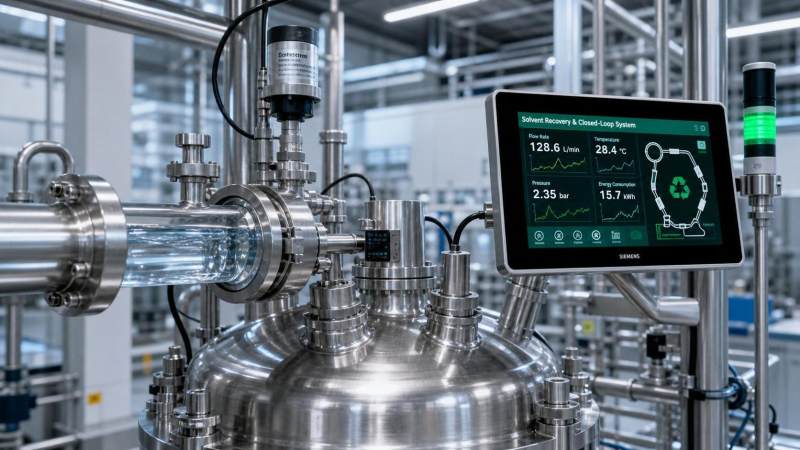
Traditional Solid-Phase Peptide Synthesis (SPPS) relies heavily on high-impact solvents such as DMF and NMP. Modern peptide factories are actively adopting aqueous phase synthesis systems or environmentally friendly organic solvents (such as 2-MeTHF and γ-Valerolactone). Furthermore, by integrating high-efficiency solvent distillation and closed-loop recovery systems, facilities significantly reduce hazardous waste generation, thereby cutting both raw material procurement and waste disposal expenses.
2. Catalytic Processes and High-Selectivity Reactions
The application of enzymatic catalysis and continuous flow chemistry represents a major technological breakthrough for eco-conscious peptide manufacturing. Compared to traditional coupling reagents, enzymes enable highly selective coupling under mild operating conditions, minimizing side reactions. This approach improves crude peptide purity, simplifies downstream purification (HPLC) energy requirements, and substantially enhances Process Mass Intensity (PMI).
3. Intelligent Energy Management in Manufacturing
Beyond optimizing chemical reactions, modern peptide plants are implementing digital energy management platforms. By precisely controlling reaction temperatures, pressure, and material flows, factories achieve cascaded energy utilization—effectively reducing both direct and indirect carbon emissions throughout the production cycle.
ConclusionThrough solvent recovery, advanced catalytic technologies, and energy-efficient operations, modern peptide factories successfully transform environmental compliance into a long-term cost advantage. This strategy not only meets stringent international environmental standards but also provides global buyers with a more competitive, reliable, and sustainable supply chain solution.