During the development of peptide-based therapeutics and chemical products, scaling from laboratory gram-scale synthesis to industrial hundred-kilogram or even metric-ton production is far more complex than simply proportionally increasing reactor volume. As the reaction volume grows, "scale-up effects"—such as mass transfer limitations, heat dissipation issues, and side reactions—often lead to reduced yields and purity fluctuations. How do major peptide manufacturing facilities leverage technology and engineering to overcome these challenges?
1. Precision Thermal Control and Agitation Flow Field Optimization
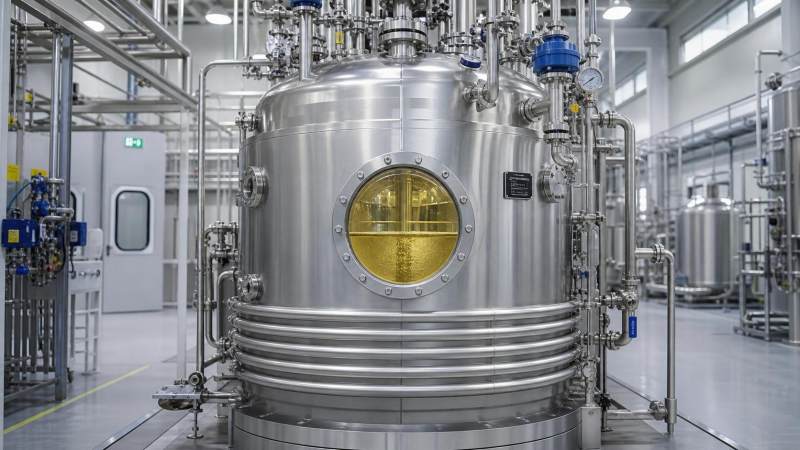
At the bench scale, laboratories easily control reaction temperatures using simple magnetic stirring and ice baths. However, in large-scale reactors, localized overheating or inadequate mixing can cause peptide racemization and an increase in impurities. Modern peptide facilities utilize Computational Fluid Dynamics (CFD) to model flow fields inside large vessels, paired with precise jacketed temperature control systems to ensure homogeneous mixing and efficient heat transfer across large-volume mixtures.
2. Adoption of Continuous Flow Chemistry and Process Analytical Technology (PAT)
To reduce the uncertainties associated with batch scaling, leading manufacturing plants are increasingly replacing traditional large batch processes with continuous flow synthesis. Integrated with Process Analytical Technology (PAT) such as Near-Infrared (NIR) spectroscopy, facilities monitor reaction progress and intermediate purity in real time. This approach substantially shortens reaction residence times while significantly enhancing batch-to-batch consistency.
3. Scalable Downstream Purification and Crystallization
Scale-up challenges extend beyond synthesis. The packing uniformity of large-scale preparative High-Performance Liquid Chromatography (HPLC) columns, solvent distribution during elution, and final drying or crystallization processes directly impact physical properties and end-product purity. Established manufacturing facilities build systematic scale-up models and perform step-by-step pilot trials to optimize downstream parameters before full commercialization.
ConclusionOvercoming scale-up effects in peptide manufacturing requires a seamless integration of chemical technology and process engineering. Through flow-field simulation, continuous flow systems, and rigorous PAT monitoring, major peptide factories effectively eliminate scaling uncertainties—delivering commercially viable peptide products with consistent quality and full regulatory compliance to global clients.